
Using the FCC Database for Product Research
Learn how professionals use the Federal Communications Commission Equipment Authorization database to conduct competitive intelligence, track product launches months in advance, and uncover technical specifications before public announcements.
The Most Underused Source of Competitive Intelligence
The FCC Equipment Authorization database represents one of the most powerful yet underutilized sources of competitive intelligence for professionals working in hardware development, consumer electronics, medical devices, wearables, and wireless product industries. This comprehensive database contains detailed technical documentation that companies are required to submit before they can legally distribute radio frequency devices in the United States market.
The strategic advantage lies in timing: FCC filings typically appear three to twelve months before a product reaches retail shelves or receives a public announcement. This advance visibility occurs because federal certification must be completed before commercial distribution begins, creating a valuable early-warning system for market intelligence professionals.
Key Intelligence Applications
Early Competitor Tracking
Identify competitor product roadmaps months before official announcements
Feature Discovery
Understand next-generation capabilities before press releases
SKU Monitoring
Track new product families and model variations across portfolios
Technology Analysis
Identify wireless technology choices including Bluetooth, Wi-Fi, NFC, and cellular modules
What Products Appear in the FCC Database?
Any product that emits radio frequency signals for sale or distribution in the United States market typically requires FCC certification and subsequently appears in the Equipment Authorization system. This regulatory requirement creates a comprehensive archive of wireless product development across multiple industries.
Bluetooth & BLE Devices
Wearable technology, hearing aids, fitness trackers, wireless earbuds, and connected accessories utilizing Bluetooth Low Energy protocols
Wi-Fi Products
Smart home devices, wireless routers, security cameras, connected appliances, and IoT hubs using 2.4GHz or 5GHz bands
IoT & Sensors
Environmental monitors, industrial sensors, agricultural technology, and building automation systems with wireless connectivity
Medical Devices
Wireless patient monitors, connected diagnostic equipment, implantable devices, and remote health monitoring systems
Critical Insight:
The FCC database documents compliance requirements, not marketing materials. Because certification occurs before product launch, this database provides intelligence that precedes traditional competitive monitoring sources by several months, offering substantial strategic advantages for market analysis, investment research, and product planning initiatives.
Starkey Laboratories Hearing Aid Example
Examining FCC ID: EOA-24GSERRICR to understand what intelligence can be extracted from Equipment Authorization filings
Product Identification
Starkey "G Series AI RIC R" hearing aid represents a next-generation receiver-in-canal device with artificial intelligence features and rechargeable battery technology
- FCC ID
- EOA-24GSERRICR
- Grantee Code
- EOA (Starkey Laboratories)
- Wireless Technology
- 2.4 GHz Bluetooth Low Energy
- Device Classification
- Medical Device - Hearing Aid
Documentation Available in FCC Filings
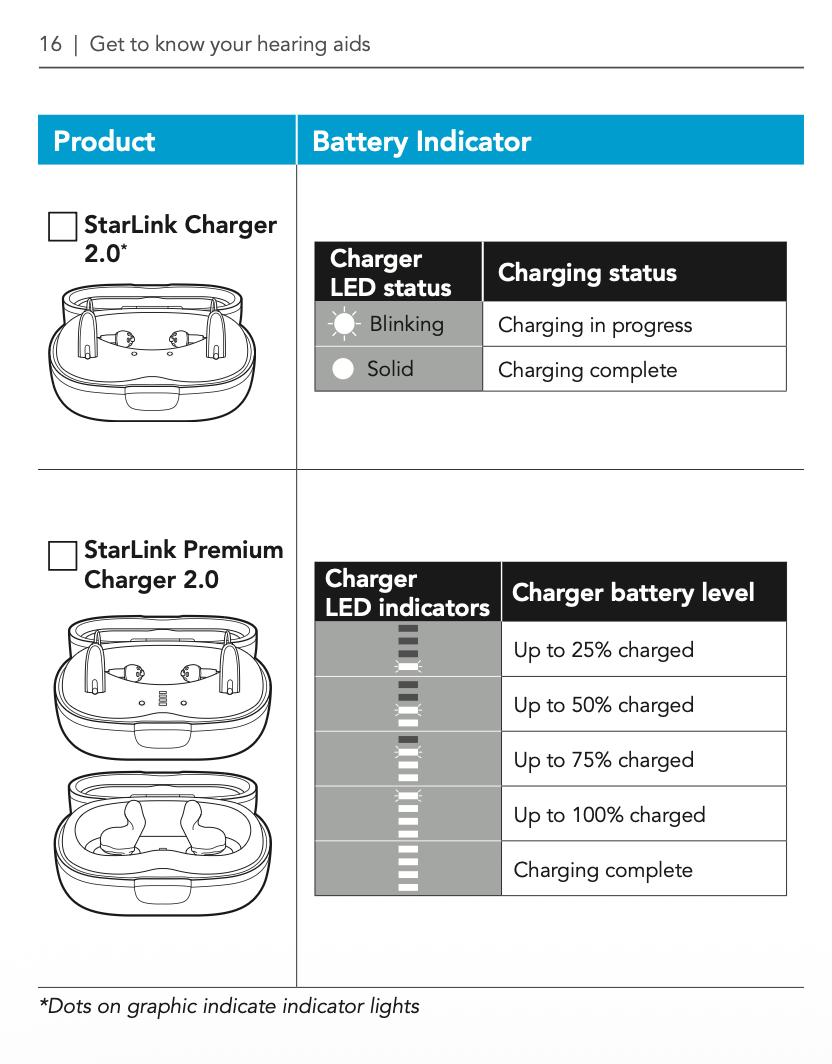
User Manual Extract
User manuals submitted to the FCC reveal detailed product features, operation modes, and accessory ecosystems. This documentation from the Starkey filing demonstrates charging system specifications, battery level indicators, and product family relationships—intelligence that helps analysts understand the complete product architecture before market release.
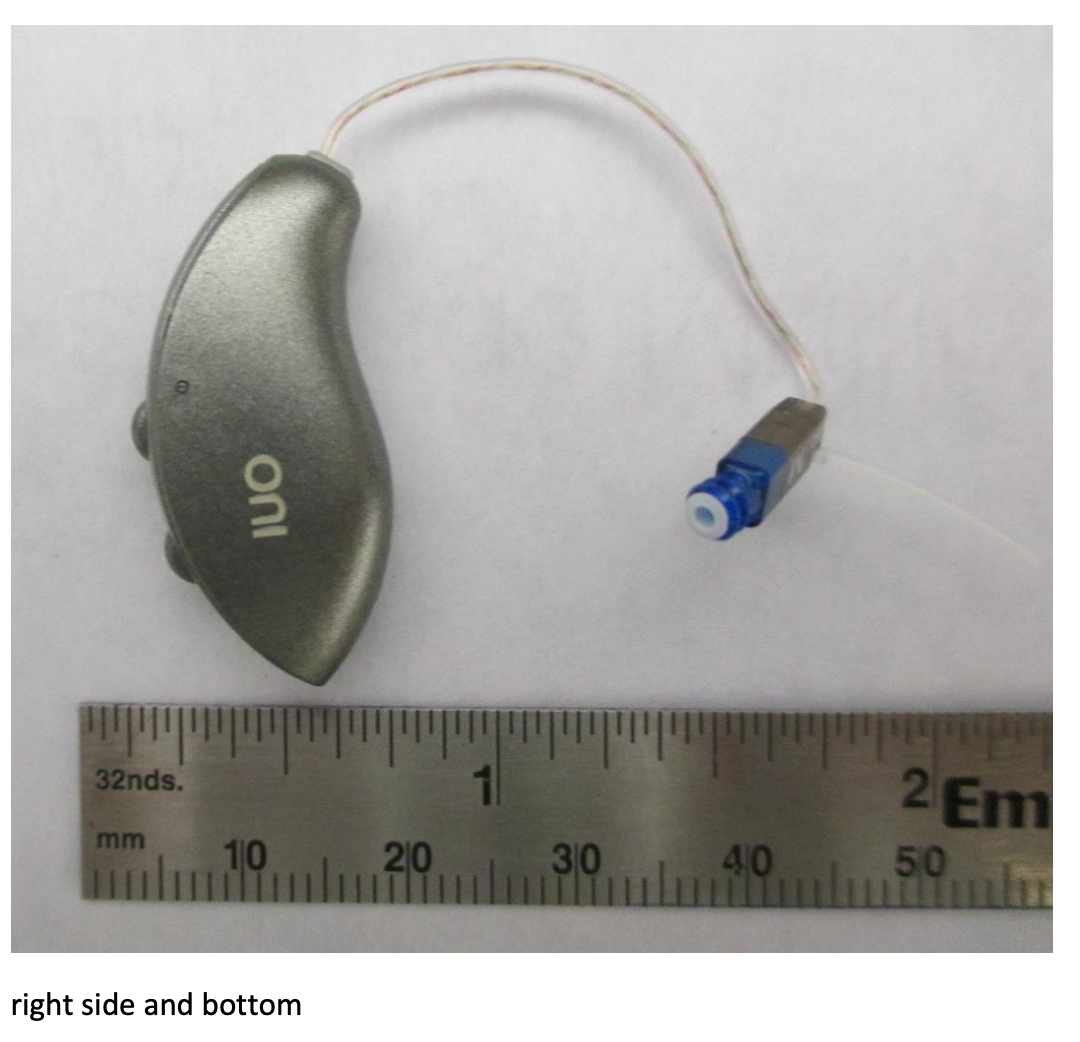
External Product Photography
External photographs provide the first public visualization of unreleased products, revealing form factor decisions, physical dimensions, button placements, microphone locations, and charging port configurations. These images enable competitive analysis of industrial design direction, miniaturization strategies, and user interface approaches before marketing materials become available.
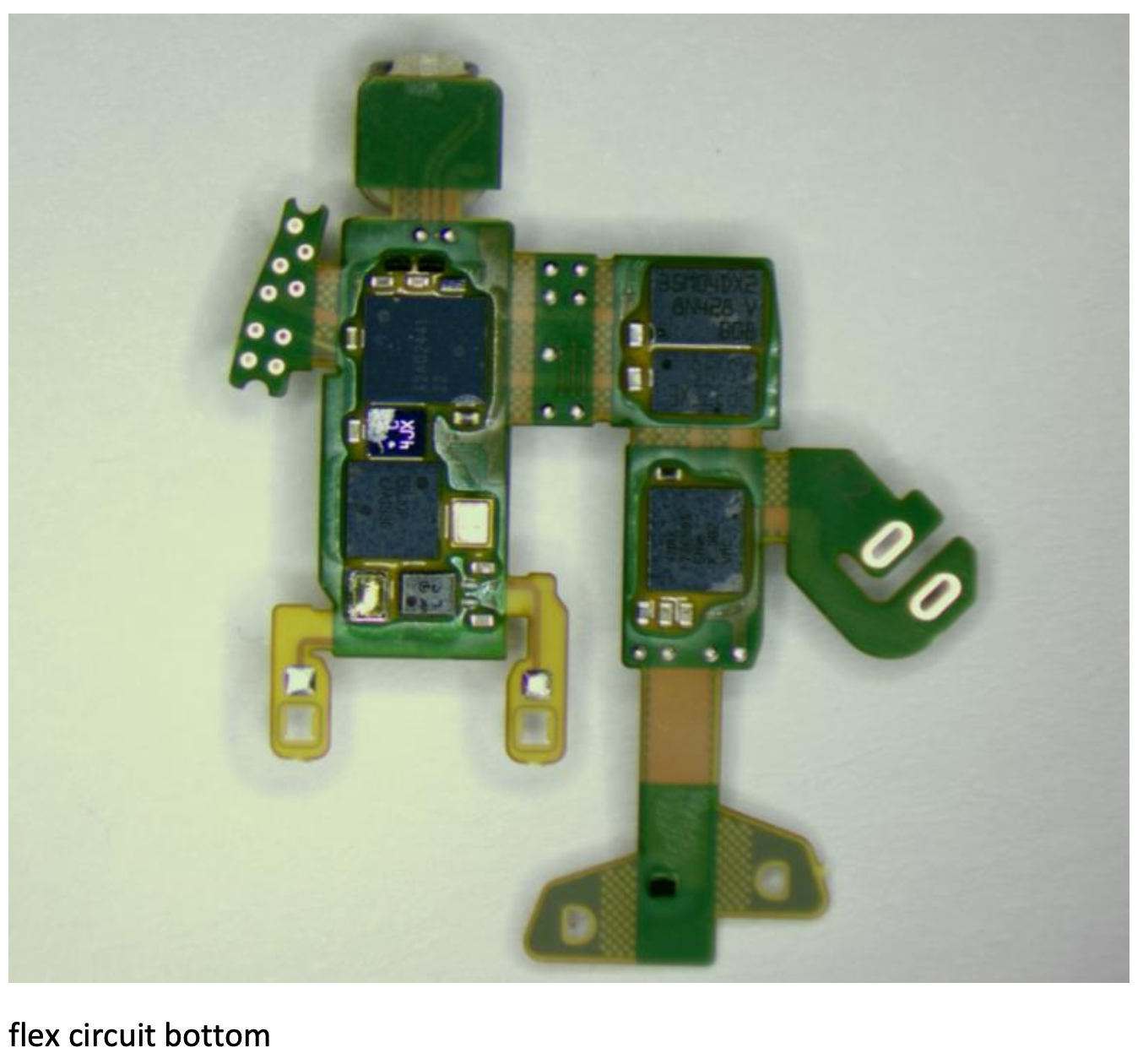
Internal Hardware Architecture
Internal photographs reveal critical hardware intelligence including printed circuit board layout, component density, mechanical assembly strategies, and manufacturing sophistication. Advanced analysts use these images to estimate bill-of-materials costs, identify component suppliers, assess platform architecture decisions, and compare engineering complexity across product generations.
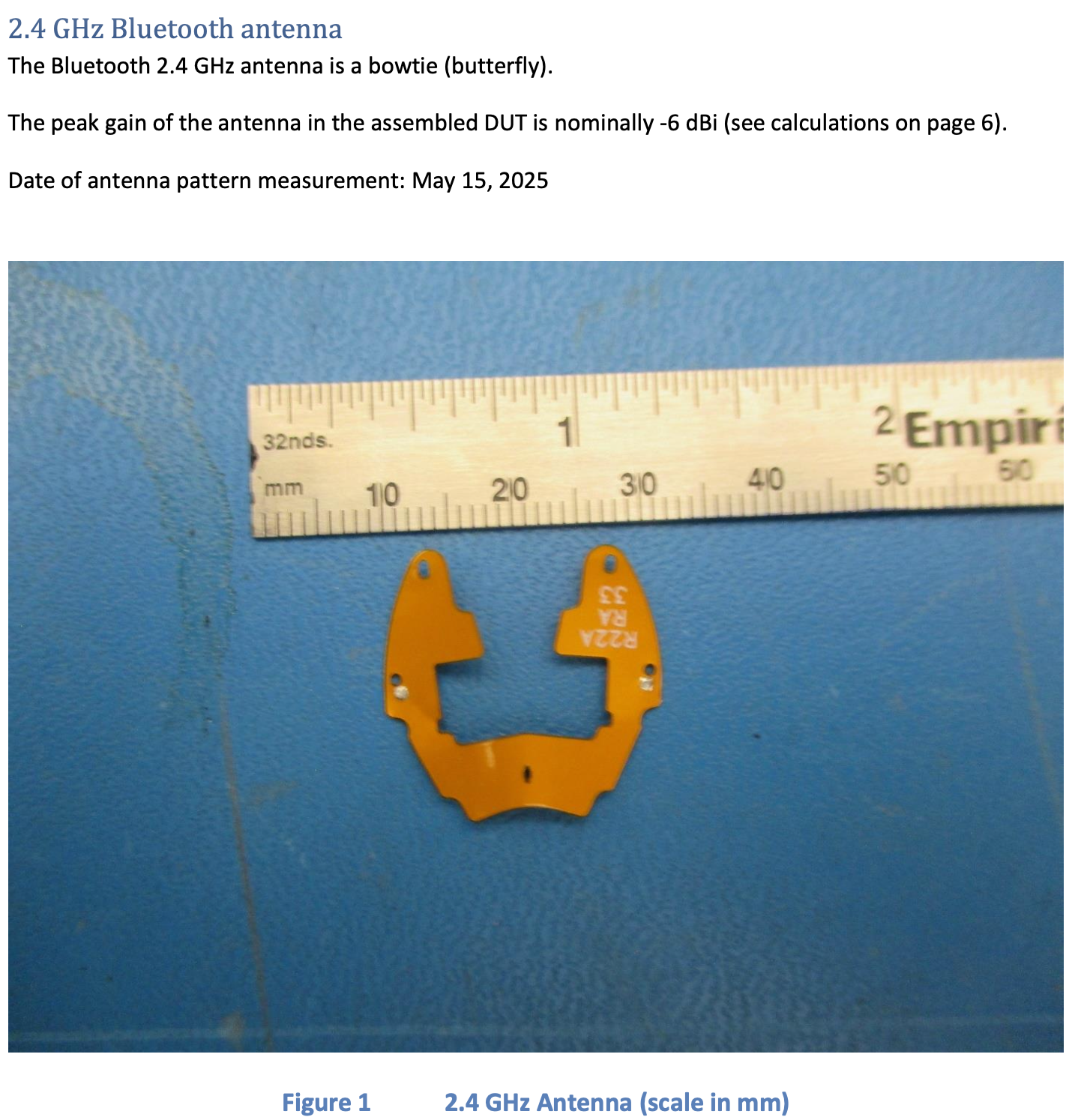
Antenna Design Documentation
Antenna documentation includes detailed specifications on gain performance, radiation patterns, and physical implementation. This particular filing shows a 2.4 GHz Bluetooth bowtie (butterfly) antenna design with a nominal peak gain of -6 dBi, measured on May 15, 2025. Wireless engineers analyze these specifications to understand range capabilities, power consumption tradeoffs, and miniaturization constraints that influence overall product performance.
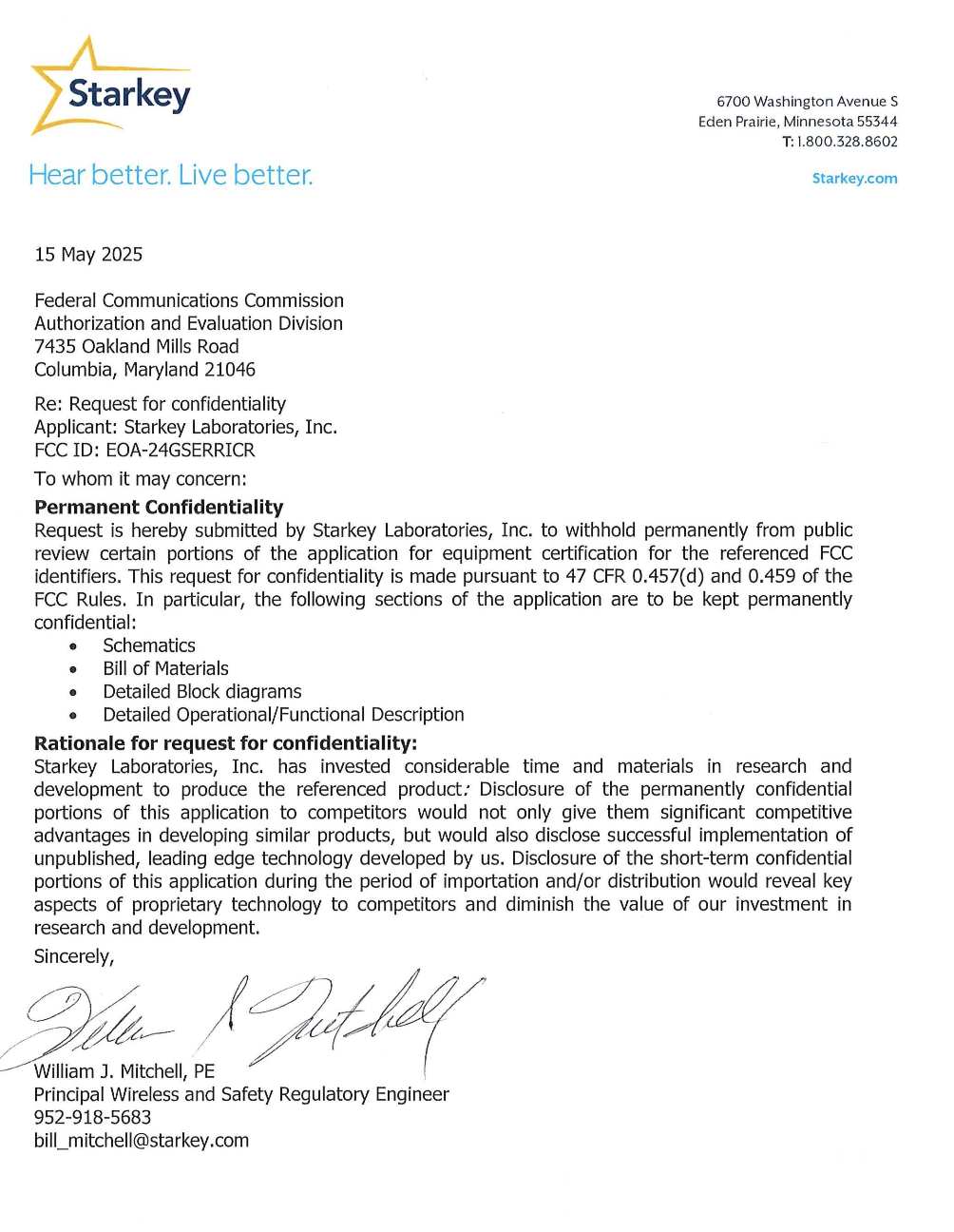
Understanding Confidentiality Requests
Applicants can request temporary or permanent confidentiality for sensitive technical documents under 47 CFR 0.457(d) and 0.459. This letter demonstrates Starkey's request for permanent confidentiality on schematics, bill of materials, detailed block diagrams, and operational descriptions. The rationale emphasizes protection of research and development investments and proprietary technology from competitive disclosure.
Intelligence professionals should monitor FCC listings continuously, as short-term confidentiality typically expires after 180 days or upon product marketing, whichever comes first. When confidential exhibits become public, they often reveal the most valuable competitive intelligence about component choices, supply chain relationships, and technical implementation strategies.
How to Search the FCC Database Effectively
The FCC Equipment Authorization system contains powerful search capabilities, but navigating the database requires understanding its structure and search methodology. Finding the correct product filing can require detective work, particularly when tracking competitors or discovering unreleased products.
Understanding FCC ID Structure
Every FCC Equipment Authorization contains a unique identifier composed of two distinct parts: the Grantee Code (assigned to the company by the FCC) and the Product Code (assigned by the applicant company for each specific device model).
Direct FCC ID Search Methods
When you have a complete FCC ID, you can search directly via the FCC's official Equipment Authorization search interface at fcc.gov/oet/ea. This database provides immediate access to all public documentation associated with that specific certification.
Discovery Strategies Without Known FCC IDs
When tracking competitors without knowing specific FCC IDs, employ these research tactics:
- Identify the Grantee Code: Search for previous product models from the target company to discover their assigned grantee code, then monitor all filings under that identifier.
- Leverage Product Family Naming: Companies frequently reuse naming patterns in FCC IDs. For hearing aids, abbreviations like "RIC" (Receiver-in-Canal), "CIC" (Completely-in-Canal), or "mRIC" (mini Receiver-in-Canal) often appear in product codes.
- Trace Documentation Breadcrumbs: Examine user manuals, product labels, regulatory statements, and packaging materials which typically contain FCC IDs that can be traced back to complete authorization filings.
- Implement Automated Monitoring: Professional intelligence platforms can automatically detect new FCC IDs, track company filings, and alert when confidential exhibits become publicly available.
Intelligence Available in FCC Filings
A comprehensive FCC Equipment Authorization filing contains substantially more intelligence than most professionals realize. Understanding what documentation is available and how to interpret it transforms FCC filings from simple compliance records into valuable competitive intelligence sources.
User Manuals
Complete operation instructions revealing features, interaction methods, app connectivity, supported modes, and accessory ecosystems before marketing materials exist.
External Product Photos
Detailed photographs showing form factor, button layouts, connector types, branding differences, and physical dimensions with measurement scales.
Internal Product Photos
Circuit board layouts, component selections, mechanical assemblies, battery configurations, and manufacturing architecture decisions.
Antenna Specifications
Antenna type, gain performance, radiation patterns, placement strategies, and wireless range implications for product performance.
RF Test Reports
Wireless standards compliance (Bluetooth version, Wi-Fi modes), transmit power levels, duty cycles, and operational frequency behavior.
Schematics & Block Diagrams
Detailed electrical schematics and system architecture diagrams (frequently protected under confidentiality requests but eventually released).
Understanding Confidential Documents
Applicants can request short-term confidentiality for sensitive documents, typically for 180 days or until public marketing begins. During this period, basic information about the product's existence remains visible, but detailed technical documentation stays protected.
Strategic intelligence operations monitor these confidential filings and receive automated alerts when protection expires and exhibits become publicly accessible. This transition moment often provides the most valuable competitive intelligence as it reveals component choices, supplier relationships, and implementation strategies that companies initially sought to protect.
How to Analyze and Interpret FCC Content
Transforming FCC documentation from compliance paperwork into actionable intelligence requires systematic analysis methodologies. Professional researchers apply specific analytical frameworks to extract strategic insights from each document type.
User Manual Feature Discovery
User manuals represent the most accessible source of pre-launch intelligence, revealing product capabilities months before marketing departments craft messaging strategies. Analysts systematically extract:
- •New interaction paradigms including tap controls, gesture recognition, and physical button behavior patterns
- •Mobile application connectivity workflows and supported smartphone platforms
- •Operating mode descriptions, adjustment procedures, and automated feature activation
- •Accessory compatibility revealing broader ecosystem strategies and charging infrastructure
- •Feature evolution evidence through comparison with previous generation documentation
External Photography Product Intelligence
External product photographs provide the first authoritative visual documentation of unreleased products, enabling industrial design analysis, competitive positioning assessment, and SKU differentiation identification. Key analytical focuses include:
- •Form factor evolution and miniaturization trends across product generations
- •User interface design philosophy through button placement, indicator positioning, and control accessibility
- •Charging and connectivity port types revealing ecosystem lock-in strategies
- •Market positioning signals through material choices, finish quality, and branding prominence
- •SKU variation detection when multiple models share similar FCC grantee codes
Internal Hardware Architecture Analysis
Internal photographs enable advanced technical intelligence extraction, particularly valuable for supply chain analysis, manufacturing cost estimation, and platform architecture understanding. Experienced analysts derive:
- •Component density and board complexity indicating cost-up or cost-down design directions
- •Identifiable component part numbers revealing processor platforms, memory configurations, and sensor selections
- •Manufacturing sophistication through assembly techniques, solder quality, and production volume indicators
- •Platform reuse versus complete redesign evidence through board architecture comparison
- •Battery technology choices, energy storage volume allocation, and power management strategies
Wireless Performance Specification Analysis
RF test reports and antenna documentation reveal wireless engineering decisions that significantly impact product performance, battery life, and competitive positioning. Technical analysis uncovers:
- •Specific Bluetooth or Wi-Fi standard versions confirming feature capabilities before launch documentation
- •Transmit power levels and duty cycle patterns indicating battery life priorities versus range optimization
- •Antenna gain performance revealing size constraint tradeoffs and wireless range expectations
- •Frequency band selections and channel usage patterns showing global market strategies
- •Coexistence strategies when products support multiple wireless protocols simultaneously
Operationalizing FCC Intelligence
FCC filings provide exceptional raw intelligence, but value creation requires systematic monitoring, tracking, and analysis workflows. Professional competitive intelligence operations transform FCC data into sustainable strategic advantages through:
Systematic Company Monitoring
Establish tracking lists for key competitors, suppliers, and market entrants by monitoring their assigned grantee codes for new product certifications.
Automated Alert Systems
Configure notification systems for new FCC ID registrations, confidentiality expiration events, and document exhibit releases.
Product Family Trend Analysis
Track certification patterns over time to identify product refresh cycles, platform transitions, and market segment strategies.
Competitive Timeline Construction
Build forward-looking product roadmaps using FCC filing dates to predict announcement timing and market entry windows.
Professional Intelligence Platforms
Manual FCC database searches become unsustainable at scale. Professional market intelligence platforms automate discovery, monitoring, and analysis workflows, enabling research teams to focus on strategic interpretation rather than data collection mechanics.
Transform FCC Data Into Strategic Intelligence
Stop manually searching FCC listings. Professional intelligence platforms automate monitoring, provide instant alerts when confidential exhibits release, and help you build comprehensive competitor timelines.